Norway Deploys Over 2,000 Underwater AI Laser Robots to Eliminate Salmon Lice
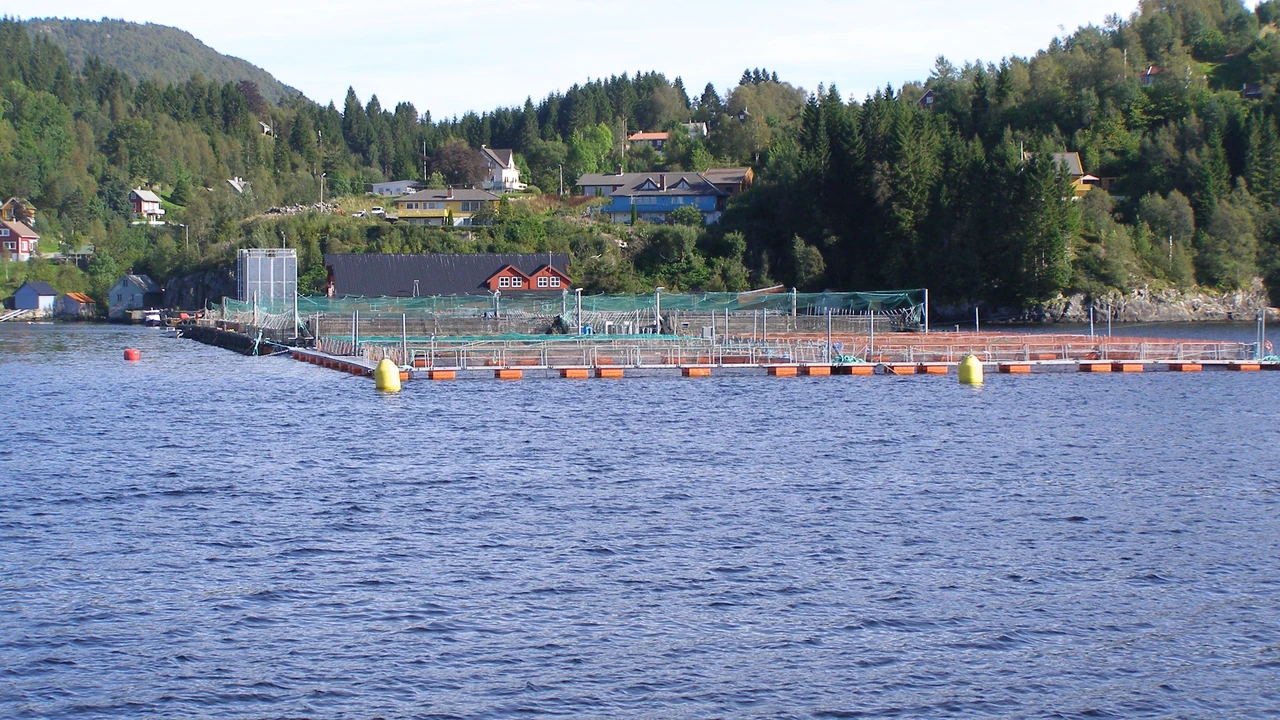
Photo credits

Norway has deployed more than 2,000 underwater robots equipped with cameras and lasers to target parasites on farmed salmon while the fish swim freely. The technology is designed to protect millions of animals from sea lice, which are tiny parasites that attach to salmon and feed on their skin.
Parasite pressure remains a persistent and costly challenge in Norwegian salmon farming, causing tissue damage, stress, and impaired health across net pens. Standard removal methods involve mechanical cleaning or brief baths in heated water. Norway’s Veterinary Institute identifies injuries resulting from these conventional treatments as a leading cause of mortality and reduced welfare in farmed salmon.
Research documents substantial harm from traditional cleaning processes. Data summarized via the Food and Agriculture Organization AGRIS database shows that for a typical cage of 150,000 fish, median mortality within two weeks reached 790 fish following thermal treatment. Mechanical treatment increased median mortality to 928 deaths, although outcomes varied across different sites. Additionally, a peer-reviewed study in the *Journal of Fish Diseases* reports that mechanical cleaning can trigger pathological changes and fatalities for days after a single treatment.
To address these hazards, a company called Stingray Marine Solutions manufactures underwater robots that combine stereo cameras, blue-light illumination, and precision lasers to identify and kill individual sea lice. The blue-light illumination increases contrast between the parasite and the salmon's skin, enabling software to distinguish target from host. According to the manufacturer, each unit can fire up to five laser pulses per second and operate continuously around the clock. Stingray states that its devices protect more than 50 million salmon and trout across Norwegian farms, though those figures have not been independently verified.
Continuous laser treatment helps farms avoid the crowding and physical handling linked to conventional mortality. However, official health reporting indicates that laser performance is uneven. A report from Norway's Veterinary Institute states that effectiveness depends on lice pressure, water currents, unit count, and how equipment is positioned inside each pen. Fish-health specialists note that lasers are most useful during low infestation levels, while their impact is harder to observe when lice pressure is high.
Laser systems also introduce an emerging welfare concern regarding fish vision. Norway's Veterinary Institute has documented reports of severe single-eye cataracts in harvest-size salmon at sites using laser installations. While this represents a recorded concern rather than proof that every setup causes harm, it leaves the technology's overall welfare balance sheet unsettled.
Summary
Continuous laser robots allow farms to reduce or delay large-scale delousing events, offering a meaningful way to avoid the mortality caused by conventional treatments. However, because effectiveness varies under heavy infestation loads and unverified systems are linked to reports of fish cataracts, the technology functions as continuous parasite management rather than a complete resolution to intensive salmon farming challenges.