Desert Solar Panels Linked to Higher Soil Carbon Levels in Study
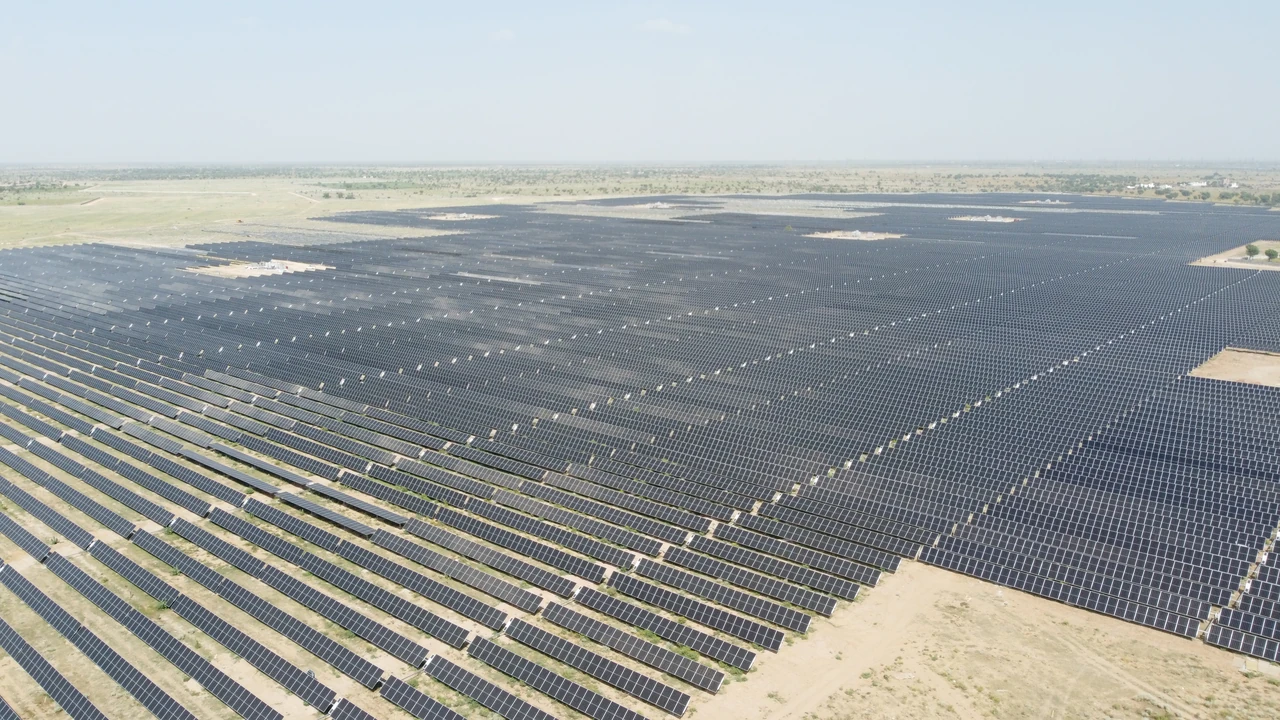
Photo credits

Soil total carbon beneath a large desert solar installation in China measured 125.89% higher than in adjacent undisturbed desert, according to a study published in the journal Environmental Technology & Innovation.
The finding is based on fieldwork conducted between 2023 and 2024 at the Talatan photovoltaic power station. Located on the northeastern Qinghai-Tibet Plateau, the facility covers approximately 67 square kilometers at an average elevation of roughly 2,910 meters. Researchers from Xi’an University of Technology and the State Power Investment Group Qinghai Photovoltaic Industry Innovation Center compared soil conditions beneath the arrays against control plots in undisturbed desert nearby.
The researchers identified several plausible explanations for the observed carbon increase. Solar panels reduce direct solar radiation on the soil surface, which lowers soil temperature and slows evaporation to create conditions that may favor moisture retention and plant recovery.
The physical design of the power station also appears to influence results. The team examined fixed, semi-tracking, and tracking panel systems, finding that tracking systems showed the strongest carbon accumulation, followed by semi-tracking and fixed systems. This pattern points to panel geometry and movement as variables that shape conditions in the soil below.
Carbon gains were most pronounced near the surface. Soil organic carbon, the more ecologically active fraction, declined significantly with depth. Soil inorganic carbon rose slightly with depth, but because organic carbon fell faster, total soil carbon decreased in the deeper layers overall.
Important limitations remain regarding how these findings apply elsewhere. The researchers noted a threshold effect, meaning that once total soil carbon exceeded a critical level, its relationship with environmental drivers shifted from negative to positive. That nonlinearity suggests carbon responses will not scale predictably as conditions vary across other sites. Furthermore, related research at photovoltaic sites in desert ecosystems has documented shifts in soil carbon-to-nitrogen-to-phosphorus ratios alongside carbon gains, meaning more stored carbon does not automatically translate to better soil fertility or a more balanced nutrient profile.
Long-term carbon permanence has not been established at Talatan, and factors such as panel spacing, local soil texture, and operation duration can alter outcomes at other sites. Additionally, a full greenhouse-gas balance accounting for panel manufacturing, land disturbance, and maintenance has not been presented in the study. Whether these effects hold across other latitudes, elevations, and soil types remains an open research question, and longer-term monitoring will be necessary before broader conclusions can be drawn.
Summary
- The study provides early evidence that photovoltaic infrastructure in arid environments can alter desert microclimates and substantially increase measured soil carbon.
- Nonlinear threshold effects and varying local conditions mean carbon gains will not automatically scale predictably or improve soil fertility across other sites.
- Long-term carbon permanence, panel manufacturing impacts, and broader geographical consistency remain open research questions requiring extended monitoring.